
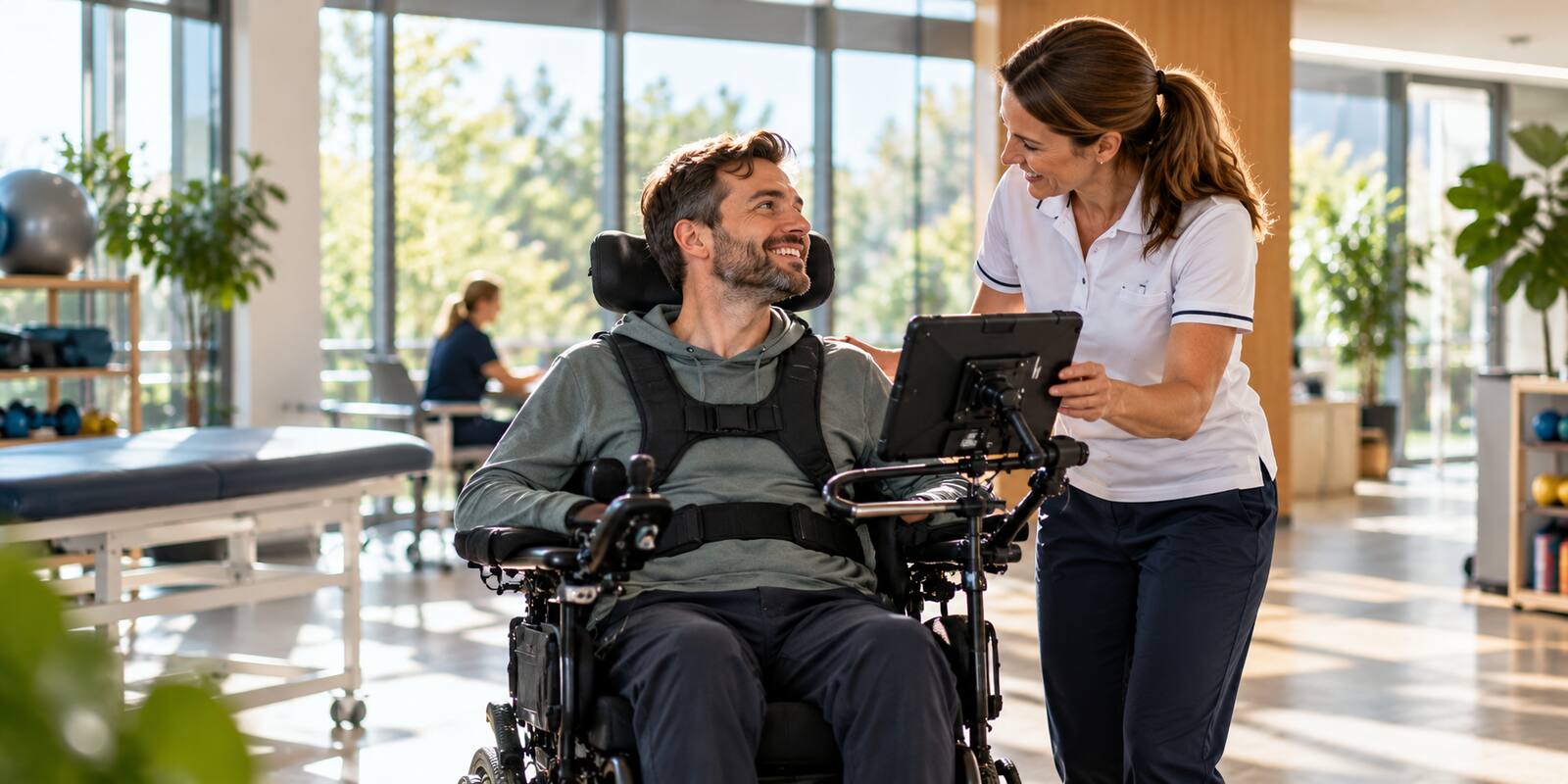
40 Years of Progress: How the Outlook Following Life-Changing Injury Has Evolved
From advances in prosthetics to a greater understanding of brain injury and the transformative potential of assistive technology, the landscape of serious injury rehabilitation has changed considerably over the past four decades. As Bush & Co celebrates its 40th anniversary, Fiona Kenny, Head of Case Management and Rehabilitation, reflects on how these developments have reshaped rehabilitation, expectations and the opportunities available to people following life-changing injury.
- Serious injury rehabilitation has evolved significantly over 40 years, shifting from a predominantly medical approach towards personalised rehabilitation focused on independence, participation and quality of life.
- Advances in prosthetics, neurorehabilitation and assistive technology have expanded opportunities for individuals following amputation, brain injury and spinal cord injury.
- Injury severity alone does not determine long-term outcomes. Early intervention, specialist rehabilitation and access to appropriate support can significantly influence an individual's recovery and independence.
- Specialist case management remains essential, helping personal injury and clinical negligence solicitors understand rehabilitation potential, coordinate interventions and identify future care and support needs.
Forty years ago, conversations around serious and catastrophic injury were often dominated by limitations, long-term dependency and what an individual might no longer be able to do. Today, while the consequences of serious injury remain just as significant, the conversation has shifted.
Advances in medical treatment, rehabilitation and technology have expanded what may be possible for people following life-changing injuries. However, perhaps one of the most important developments has been a change in how we understand rehabilitation itself.
Rather than focusing solely on clinical recovery, modern rehabilitation increasingly considers the whole person, their individual circumstances, aspirations and what a fulfilling life looks like for them.
This shift towards earlier, more coordinated rehabilitation is reflected in NICE guidance, which recommends that rehabilitation needs are assessed from admission following traumatic injury, with a personalised approach encompassing physical, cognitive and psychological needs.
As Fiona explains:
What stands out most is the shift from only discussing what people have lost, to a focus on what remains possible, and how we can support with that.
This shift in thinking has influenced how rehabilitation is delivered, how potential is assessed and how professionals work together to achieve the best possible outcomes.
Looking beyond the injury
One of the most significant developments over the past 40 years has been a greater understanding that the severity of an injury does not, in isolation, determine its long-term impact.
Historically, injury severity was often considered primarily in terms of the immediate physical damage. Today, clinicians recognise a much more complex picture, encompassing physical, cognitive, psychological, environmental and social factors.
Two individuals with seemingly similar injuries can have very different rehabilitation needs, experiences and outcomes.
Access to specialist rehabilitation, appropriate accommodation, assistive technology, family support and opportunities for employment or education can all influence an individual's long-term independence and quality of life.
For personal injury and clinical negligence solicitors, this is an important distinction. Understanding a client's diagnosis is essential, but so is understanding their rehabilitation potential, the barriers they may face and the support required to achieve meaningful progress.
A clinically informed assessment helps identify not only immediate rehabilitation requirements but also the interventions, equipment, accommodation and care that may be needed in the future.
And as rehabilitation continues to advance, the possibilities for individuals following different types of serious injury continue to evolve.
Brain injury: Understanding what cannot always be seen
Our understanding of acquired brain injury has developed substantially over the past four decades.
Advances in acute medical treatment, specialist neurorehabilitation and greater professional awareness have improved how brain injury is recognised and managed.
But one of the most important changes has been a deeper understanding of the less visible consequences of brain injury.
Difficulties with memory, fatigue, executive functioning, emotional regulation and social communication can profoundly affect everyday life, relationships, employment and independence.
The growing recognition of these complex needs is reflected in NICE's 2025 neurological rehabilitation guidance, which highlights the importance of holistic assessment and recognises the role of complex case management for individuals with particular long-term rehabilitation needs.
These challenges may not be immediately apparent and can fluctuate over time. In some cases, difficulties become more noticeable when an individual attempts to return to work, education or more complex daily activities.
This reinforces why rehabilitation cannot be determined by diagnosis or initial presentation alone.
For solicitors managing brain injury claims, understanding these less visible effects is particularly important when considering rehabilitation needs, future care requirements and the likely impact on an individual's everyday life.
It also highlights the value of specialist case management in coordinating appropriate neurorehabilitation, identifying emerging needs and ensuring support evolves alongside the client's recovery.
Spinal cord injury: Technology creating greater independence
The management of spinal cord injury has undergone significant developments, with improvements in acute care, specialist spinal services, rehabilitation programmes and assistive technology contributing to better opportunities for health, independence and quality of life.
While the consequences of spinal cord injury can remain profound, developments in technology have expanded the ways individuals can manage everyday activities and participate in their communities.
Powered mobility equipment, environmental control systems, adaptive driving technology, smart home solutions and communication devices can all support greater autonomy.
For someone with significantly reduced mobility, the ability to independently control lighting, heating, communication systems or other elements of their home environment can make a meaningful difference to daily life.
Beyond convenience, these developments can support dignity, personal choice, employment and social participation.
However, achieving these benefits requires more than access to technology alone. The right equipment must be identified, assessed and integrated into an individual's wider rehabilitation and support arrangements.
This is where specialist clinical knowledge, coordinated rehabilitation and a clear understanding of the individual's aspirations remain fundamental.
Amputation: Moving beyond mobility
Perhaps one of the most visible examples of progress can be seen in the rehabilitation of individuals following amputation.
Developments in surgical techniques, specialist rehabilitation and prosthetic technology have significantly expanded the options available to people with limb loss.
Modern prosthetics can offer improvements in comfort, balance, mobility and energy efficiency. Microprocessor-controlled knees, advanced socket technology and activity-specific prostheses can help individuals participate in activities that may previously have been considerably more challenging.
Knowledge and expertise developed through military medicine and rehabilitation have also contributed to advancements in civilian rehabilitation.
However, the most important change is arguably not simply what the technology can do, but what it can enable an individual to achieve.
Where rehabilitation may once have focused predominantly on restoring mobility, the emphasis today is increasingly on supporting people to return to the activities and roles that matter most to them.
That could mean returning to a physically demanding career, caring for children, travelling independently or participating in sport.
The psychological benefits of greater independence and participation can be just as important as the physical gains.
Of course, even the most advanced prosthetic technology is only one element of successful rehabilitation. Appropriate assessment, specialist input and ongoing support remain essential to ensuring that interventions are suited to an individual's needs and circumstances.
Has the role of the case manager changed too?
As rehabilitation has become more sophisticated, so too has the role of the case manager.
Where case management may once have been viewed primarily as the coordination of rehabilitation services, today's case managers can play a much broader role in providing strategic oversight, advocacy and clinical coordination.
Complex rehabilitation programmes frequently involve multiple professionals and organisations, including treating clinicians, therapists, equipment providers, employers, education providers and family members.
Bringing these elements together requires both specialist clinical knowledge and an understanding of how individual interventions contribute to the client's wider goals.
The case manager plays an important role in ensuring that rehabilitation is coordinated, responsive and focused on meaningful outcomes.
For solicitors, this provides valuable insight into the client's changing needs and rehabilitation potential, helping inform decisions around rehabilitation funding, care, equipment, accommodation and longer-term support.
Crucially, advances in rehabilitation do not reduce the need for specialist case management. In many respects, they make clinically informed coordination even more important.
With more treatment options, technologies and rehabilitation pathways available, identifying the most appropriate interventions for an individual requires careful assessment and specialist expertise.
Why early intervention remains as important as ever
Despite the considerable progress of the past 40 years, some principles of effective rehabilitation remain unchanged.
Early intervention, personalised support, realistic goal setting and access to appropriate clinical expertise continue to be central to achieving positive outcomes.
What has evolved is the emphasis on taking a proactive approach.
Rather than waiting to establish the full extent of recovery before exploring rehabilitation opportunities, there is greater recognition of the value of identifying needs and initiating appropriate interventions at the earliest suitable opportunity.
For solicitors, this reinforces the importance of avoiding assumptions about a client's future based solely on their diagnosis or initial presentation.
An individual's rehabilitation potential may be influenced by a combination of factors, many of which can change over time. Equally, technological advances should not lead to unrealistic assumptions about future independence or reduced care requirements.
Understanding both the possibilities and the limitations is essential.
The next 40 years: What does the future hold?
Looking ahead, the continued convergence of technology and rehabilitation offers considerable potential.
Developments in artificial intelligence, robotics, neurotechnology, brain-computer interfaces, advanced prosthetics and personalised rehabilitation programmes could create further opportunities for independence and participation.
However, while innovation is likely to continue transforming the rehabilitation landscape, technology alone will never determine an individual's outcome.
The ability to understand a person's needs, recognise their potential and coordinate the right support around them will remain fundamental.
As Bush & Co celebrates 40 years, the evolution of serious injury rehabilitation provides much reason for optimism.
The greatest progress is not simply that treatment and technology have improved. It is that our understanding of what meaningful rehabilitation looks like has developed alongside them.
Forty years of progress have taught us that while an injury may change the course of someone's life, it should not automatically define the limits of what that life can become.
At Bush & Co, our approach to case management continues to reflect this principle: combining specialist clinical knowledge with personalised rehabilitation planning to support individuals following life-changing injury.
About Fiona Kenny, Head of Case Management & Rehabilitation

Fiona joined Bush & Co in 2015 and is responsible for the leadership of our Case Management & Rehabilitation Service and Clinical Operations Managers who oversee our large and ever growing network of associate and employed case managers, and sits as the Caldicott Guardian and lead clinician within our Governance Board; ensuring we work to the best interests of our clients. Fiona sits on the Professional Development Committee of the Institute of Registered Case Managers.
She is a registered nurse with over 30 years’ clinical experience in acute medical settings and the management of chronic disease and associated complications. Fiona has previously worked in a leadership role within a global insurer.